
Monday to Sunday, 7 AM – 9 PM
Get safe rear visibility back fast with precise fit, tempered safety glass, and clear upfront pricing.
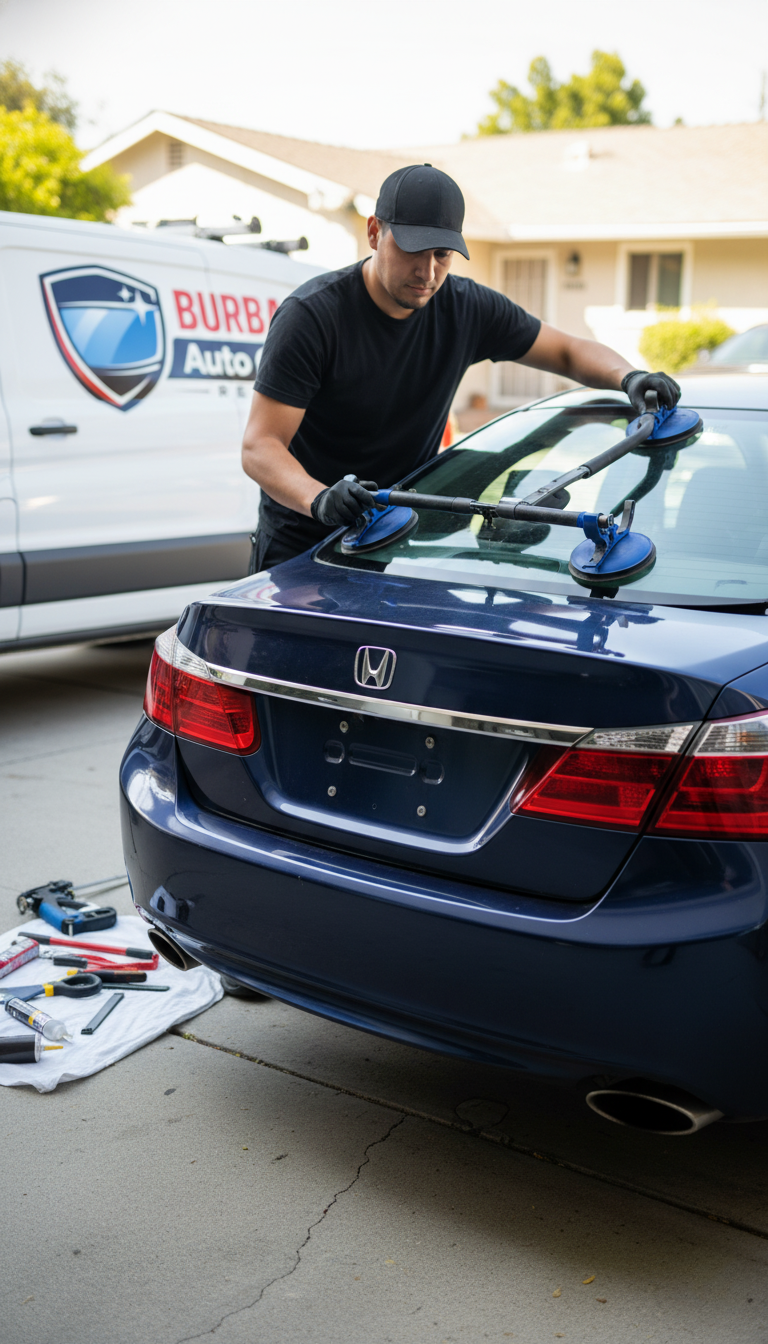

Quick quotes are provided based on your vehicle details, glass type, and service requirements.

Clear written estimates are shared upfront so you know the pricing before any work begins.

Mobile service is available for eligible vehicles and glass types based on service conditions.

Final inspection includes sealing checks to help reduce leak risk and wind noise after installation.

Glass options include OEM and aftermarket selections based on fitment, availability, and vehicle requirements.
Rear windshield replacement is required when the rear glass breaks because it is tempered safety glass and typically shatters into small pieces. The work removes debris, cleans the mounting area, sets new rear glass to the correct contour, and bonds it with automotive urethane for secure seating and long term sealing.
Burbank Auto Glass Repair verifies fit, checks for water leaks and wind noise, and confirms connected features when present. Rear defroster connections and embedded antenna elements are addressed during installation and checked before the vehicle is released.
Call now to replace your rear glass today
+1 (818) 239-4867Rear glass replacement restores rear visibility, cabin protection, and rear window function after rear glass damage affects safe enclosure or clear sight through the back window. A damaged rear glass panel can expose the vehicle to water intrusion, wind noise, loose glass debris, and reduced visibility, so replacement becomes necessary when the rear glass no longer provides a secure, sealed fit.
Rear glass replacement is needed when rear glass damage, seal failure, or mounting problems affect visibility, weather protection, or safe glass retention in the rear window opening. Rear glass damage is not always limited to visible cracks because shattered glass, missing sections, loose glass, edge separation, and leak related failure can all indicate that the rear glass no longer sits securely in the frame.
Shattered rear glass, missing glass from the rear window area, water leaks near the rear glass edge, wind noise that started after rear glass damage, and rear glass that no longer sits flush in the frame all indicate conditions that commonly require rear glass replacement.
Tempered safety glass is designed to break into small pieces instead of long, sharp shards, which is why rear glass replacement is typically required once rear glass is damaged. This break pattern helps protect occupants during impact, but it also means the rear glass does not qualify for the type of structural repair used on laminated windshield glass.
Rear glass replacement follows a controlled process that supports safe glass removal, correct bonding, contour matched installation, and restored rear window function when applicable. Each installation step helps the new rear glass seat fit correctly, seal consistently, and perform as intended in daily driving conditions.
Glass removal and cleanup clear broken rear glass from the rear window opening, surrounding trim edges, and nearby vehicle surfaces before installation begins. Removing loose debris supports a cleaner bond line and reduces the risk of fitment or sealing problems during rear glass replacement.
Surface preparation for bonding readies the mounting area for proper adhesive contact by addressing the existing bond surface and required prep conditions before new glass is installed. Clean preparation supports long term sealing, stable rear glass seating, and reduced risk of leaks or wind noise after replacement.
Adhesive bonding and installation place automotive urethane along the prepared bonding surface and position the new rear glass for correct alignment, edge spacing, and contour match. Proper installation helps the rear glass seat securely and maintains a weather resistant seal across the full glass perimeter.
Rear defroster reconnection applies when the replacement glass includes a defroster grid and related electrical connectors. The installation process addresses those connections so the rear defroster system can function as intended after rear glass replacement.
Embedded antenna support applies when the rear glass includes antenna elements built into the glass. Installation addresses those connections so the replacement rear glass matches the rear window configuration when that feature is present.
Rear glass fit, seal, and finish checks confirm that rear glass replacement meets installation standards before the vehicle is released. These final checks verify seal integrity, correct seating, clean glass alignment, and proper operation of connected rear window features when applicable.
Seal verification checks whether the rear glass seats correctly and maintains consistent contact around the bonded edge. Leak risk and wind noise risk are reduced by confirming proper seating and perimeter fit after rear glass replacement.
Finish inspection reviews the bond line, edge contact, and surrounding trim alignment to confirm a clean finished appearance after rear glass replacement. This step also helps identify visible fitment issues before the vehicle is returned.
Function checks confirm rear defroster operation, electrical connector condition, and antenna related performance when those features are present in the replacement rear glass. These checks verify that rear glass replacement supports both correct glass fitment and rear window feature compatibility.
Call Today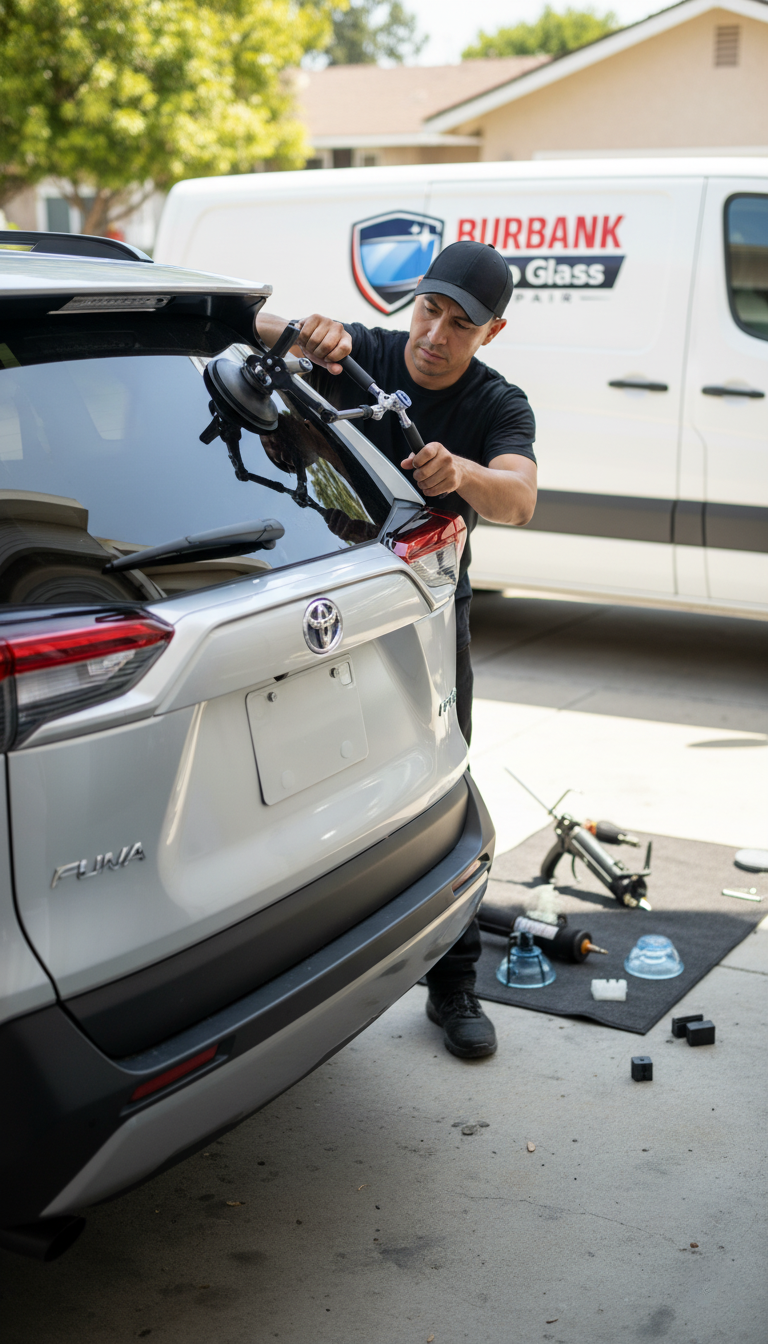
Rear glass replacement timing depends on vehicle year, make, model, rear window configuration, and rear glass availability. Drive away time is provided after installation based on adhesive cure requirements, so the vehicle is released with clear guidance for safe use after rear glass replacement.
Scheduling depends on vehicle details, rear window configuration, glass availability, rear defroster grid requirements, embedded antenna elements when present, and the condition of related trim or hardware. These details determine parts sourcing, appointment timing, and installation planning for rear glass replacement.
Rear glass replacement cost depends on the vehicle, rear window configuration, selected rear glass option, and the labor required to achieve correct fit and seal integrity. Accurate pricing is built from the actual rear glass specification, related rear window features, and installation requirements tied to the vehicle.
Primary cost drivers include vehicle year, make, model, body style, OEM rear glass versus aftermarket rear glass, privacy glass tint requirements, rear defroster grid requirements when present, and embedded antenna elements when present. These details affect rear glass specification, parts selection, and total installation complexity.
Rear glass replacement cost depends on the vehicle, rear window configuration, selected rear glass option, and the labor required to achieve correct fit and seal integrity. Accurate pricing is built from the actual rear glass specification, related rear window features, and installation requirements tied to the vehicle.
Replace the rear windshield because the rear glass uses tempered safety glass that shatters on impact. Repair is not effective. Replacement restores proper mounting, sealing, and full rear window function after installation.
Complete rear window replacement within 60 to 120 minutes, depending on vehicle type and glass availability. Drive away time depends on adhesive cure time, which typically requires 30 to 60 minutes for safe bonding.
Restore rear defroster function after replacement by reconnecting and testing the defroster grid connectors. Proper installation ensures the defroster heats evenly and clears condensation or frost as designed.
Match the rear window privacy tint as closely as possible using available glass options for the vehicle. Exact shading depends on the manufacturer's supply, but color and opacity typically align with factory specifications.
Use OEM glass only when exact factory matching is required. Aftermarket glass meets safety standards and fits most vehicles, while OEM glass provides closer alignment in thickness, tint, and branding when available.
Share vehicle year, make, model, and rear window details
for accurate pricing. Photos help confirm glass
type and feature configuration.